Epigenetic Modulation via Copper Peptides
GHK-Cu (Glycyl-L-histidyl-L-lysine) is a naturally occurring copper complex that was first isolated from human plasma in 1973. While many research peptides operate by binding to a single, specific receptor to trigger a cascade (like GLP-1), GHK-Cu operates on an entirely different paradigm. It acts as an epigenetic modulator, capable of upregulating or downregulating the expression of thousands of genes. This guide provides a structural overview of GHK-Cu. Catalyst Sciences products are strictly for research use only (RUO) and not for human consumption.
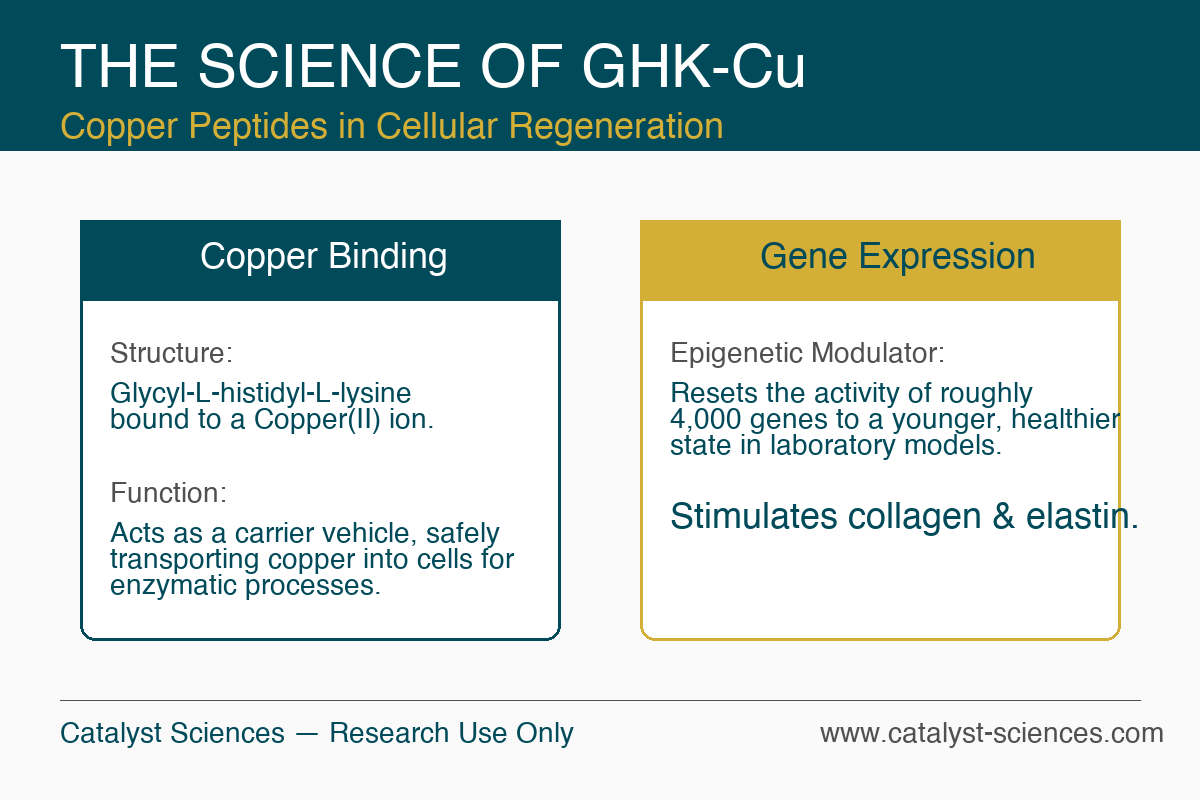
Copper Peptides in Cellular Regeneration
The Biochemistry of Copper Transport
Copper is an essential trace element required for the function of numerous critical enzymes, including cytochrome c oxidase (for cellular energy) and lysyl oxidase (for collagen cross-linking). However, free copper ions in the bloodstream are highly toxic and can cause severe oxidative stress.
The GHK tripeptide has a phenomenally high affinity for Copper(II) ions. When GHK binds to copper, it forms GHK-Cu, a non-toxic, highly mobile transport vehicle. This complex safely delivers copper directly into the intracellular matrix where it is required for enzymatic function and tissue repair.
Gene Expression and Reversal
The most profound aspect of GHK-Cu research is its effect on the genome. As an organism ages, certain genes associated with inflammation and tissue degradation become over-expressed, while genes associated with regeneration become dormant.
Extensive microarray analysis has demonstrated that introducing GHK-Cu to cellular models can “reset” the activity of approximately 4,000 genes to a younger, healthier state. Specifically, it significantly upregulates the genes responsible for the synthesis of collagen, elastin, and proteoglycans, while simultaneously downregulating the genes responsible for producing matrix metalloproteinases (MMPs) — the enzymes that tear down healthy skin architecture.
Laboratory Applications
Due to its broad epigenetic influence, GHK-Cu is utilized in a wide variety of in-vitro and murine models:
- Wound Healing: In models of severe burns and ischemic wounds, GHK-Cu accelerates the contraction of the wound bed, promotes angiogenesis, and increases the antioxidant defense mechanisms of the surrounding tissue.
- Fibroblast Stimulation: It is heavily utilized in dermatological research to study the structural rebuilding of the extracellular matrix, demonstrating significant increases in skin elasticity and thickness.
- Neurological Protection: Recent studies have focused on GHK-Cu’s ability to protect neurons from oxidative stress and beta-amyloid toxicity, indicating potential applications in models of neurodegenerative diseases.
Disclaimer: This article is for informational laboratory reference only. Catalyst Sciences products are sold strictly for laboratory research use only (RUO). Not for human or veterinary use. Not a drug, food, or cosmetic. Not for diagnostic or therapeutic use.